Hearing Aid Academy

Licensing Education
Program

#1 Most Advanced Online Course
For Hearing Aid Specialists
Licensing Education Program

“#1 Most Advanced Online Course
For Hearing Aid Specialists”

Get Your Hearing Instrument Specialist License and Be Working In This Exciting Career, Earning $60k+ In the Next 3 Months!

Take The First Step Into
Your New Career
Why Hearing Aid Academy?

1

Online Video Training Format

Over 30 Modules | 80+ Hours of Video Education | Set Your Own Schedule.

Students watch recorded videos on their own schedule, while the instructor is able to explain key concepts, demonstrate situations, and use stories and analogies to help students learn the materials more easily than learning from a book. As long as you have an internet connection, you can be learning and building your new career as a Hearing Instrument Specialist.

Student taking an online video lesson with headphones

2

Live Instructors

7-Days A Week by Phone or Email | 20+ Years of Experience, Each | No Additional Cost, Unlimited Access

The team of Hearing Aid Academy live instructors can be reached through a ticketing system 24/7 so they are able to respond to any questions students may have about the online education. This expert team will also host live workshops and Q&A calls several times throughout the week so students can have access and ask questions to the live staff regularly. All Hearing Aid Academy staff have over 20 years of experience and a diverse background to be able to help students in all education areas.

Student on a video call with a live instructor

3

Access To Simulation Software

Students are able to conduct simulated hearing tests through an advanced computer simulation program, that tackles all aspects of “real” hearing tests. Students’ ability to perfect the testing process and get in-depth experience with multiple types of hearing loss, provides them with real experience and preparation for working in the clinic as a Hearing Instrument Specialist. Students are provided 6-months of access INCLUDED with the program purchase. Additional months may be purchased for a small fee after 6 months.
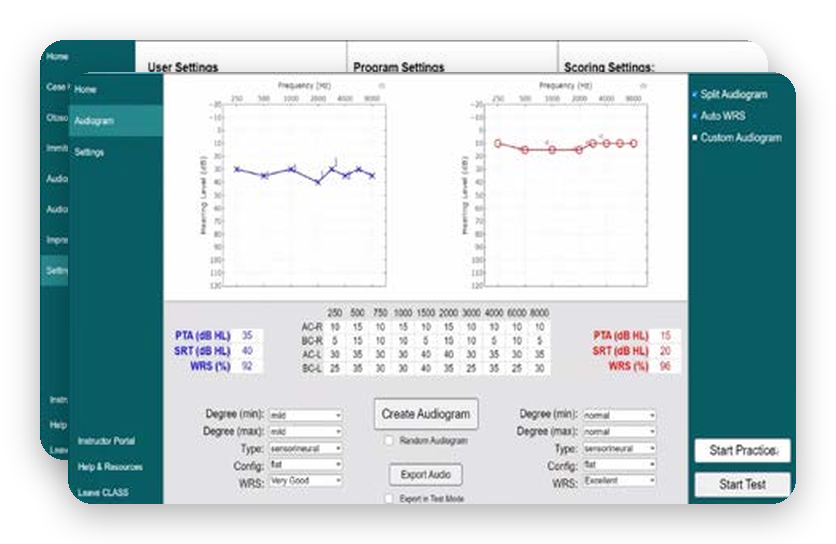
Hearing test simulation software showing an audiogram

4

Weekly Virtual Workshops

LIVE Instructor WorkshopsLIVE Call-In Hour

The learning experience is greatly enhanced through our LIVE virtual calls on ZOOM. Students can interact with the instructors, ask questions, and receive in-depth knowledge about various topics. Calls are designed to be interactive providing each student with a chance to participate and learn. There are calls every Tuesday and Wednesday evening at 8:00 PM (EST). All calls are recorded and replays are available when students are unable to attend live.

Instructor teaching a live virtual workshop on a laptop screen

5

Live Hands On
Bootcamp LIVE

The LIVE Bootcamp has become one of the most successful and sought after parts of the Hearing Aid Academy education program. Students join us live in various locations throughout the U.S. and are provided with an immersive “hands-on” education learning all aspects of the job as a Hearing Instrument Specialist. This includes air and bone conduction, masking, speech recognition, molds and impressions, diagnosing hearing aids and more.

This event will also prepare students to take and pass the practical exam. This event is open to students and non-students trying to prepare for their exams. Contact the Hearing Aid Academy for upcoming Bootcamp dates.
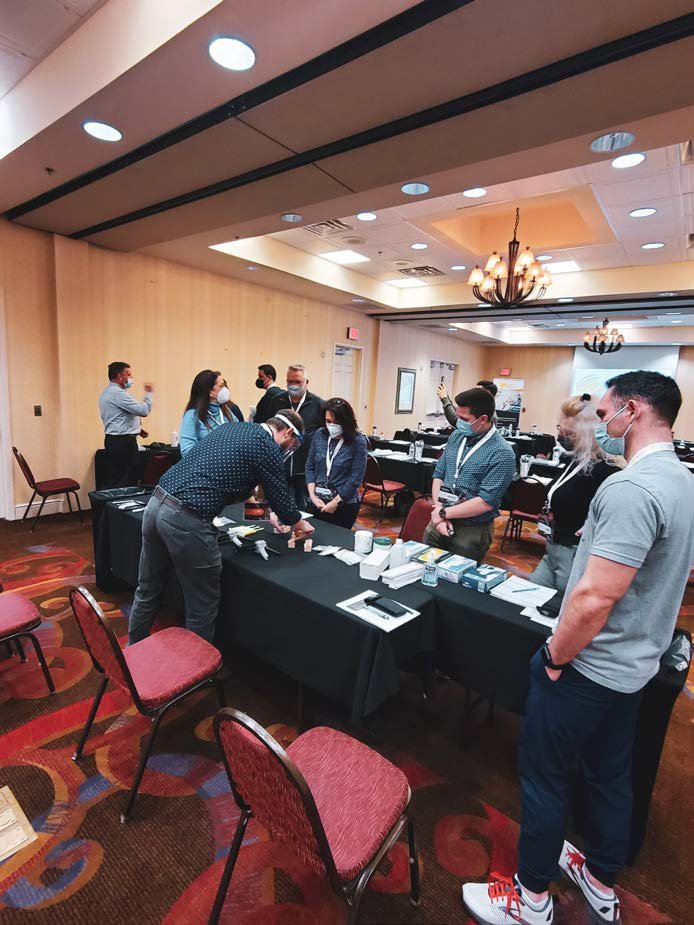
Students practicing at a live hands-on bootcamp

6

Complete A.I. Suite Of Tools For Learning

The Hearing Aid Academy wants to give you the best opportunity to pass your exams. Hearing Aid Academy has an extraordinarily high pass rate of over 94% of students who pass their state exam on their first try. We have testing throughout the program and 3 final exams that have been updated to the current format of the state exams. We also have special training sessions on how to effectively take the state board exams. Each student has access to an A.I. companion and A.I. based study tools to ensure your success. The A.I. tools are always complemented by real-life human support, but give you 24/7 assistance.

Student writing answers on an exam paper

7

Job Placement

The Hearing Aid Academy has worked very hard to establish great relationships with hearing centers around the United States. We currently represent over 6,000 hearing centers nationwide. The job market is in high demand and HAA has been extremely successful in helping students get placed in top jobs with highly reputable and successful companies. Job placement services are available to all Hearing Aid Academy student graduates. No one else works harder to help students get placed into great jobs.

Graduate shaking hands with a hearing center team

8

Student Only Facebook Group

Online education can be very lonely and independent. However, the Hearing Aid Academy has a private online Facebook group for students to interact with and help each other succeed in this program. Students build friendships and camaraderie by sharing the common goal of successfully completing the education program and becoming great Hearing Instrument Specialists. Many students forge lifelong friendships with other students and build a network of colleagues who can support each other for years to come.

Students connected through the private Facebook group

How It Works?

  1. Fill out the Registration Form hearingaidacademy.com/register
  2. Get accepted by the Hearing Aid Academy Note: Approvals are based on several factors and normally take 1–2 days to determine eligibility
  3. Enjoy 30 modules (80+ hrs) of video lectures
  4. Build a relationship with your instructors. (Available 7 days a week)
  5. Complete state requirements to start working as a HIS
  6. Job placement opportunities through our Job Alliance Program
  7. Enjoy your new career as a Hearing Aid Specialist!

Who Is This Course For

  • Anyone Interested In Helping Others With Hearing Loss
  • Graduates Looking For A Rewarding Career
  • Those Looking For A NEW, Rewarding Career In The Medical Field (even if you don’t have any previous experience)
  • Anybody Working Without A License In A Hearing Aid Center But Looking To Advance Their Career By Getting Licensed
  • People With A Sales Background
  • Entrepreneurs or Business Owners/CEO’s
  • Medical Professionals (chiropractors, eye care, dental) Looking To Add Additional Services To Your Existing Practice
  • Those Working Towards An Audiologist Degree, As Additional Experience.
  • Anyone Looking To Work In A Stable and Rewarding Career That Pays Very Well
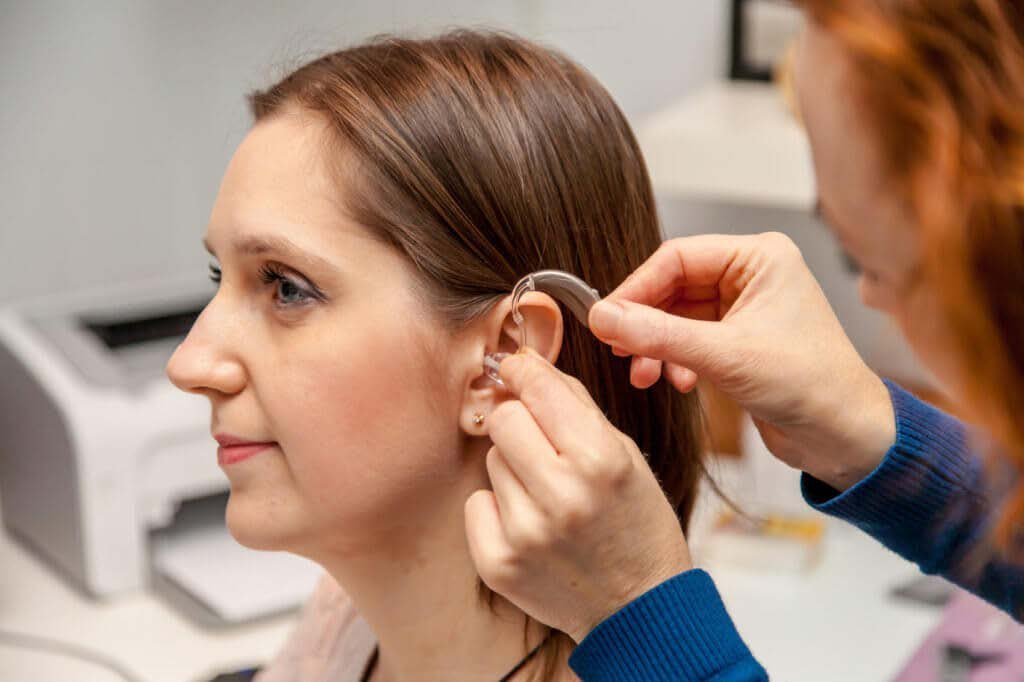
Specialist placing a hearing aid on a patient

2026 Course Curriculum


Hearing aid specialist adjusting a smiling patient's hearing aid

Program Outline

Lesson # Lesson Title
LESSON 1 Special Needs of Geriatric Population
LESSON 2 Psychology and Psychosocial Behavior
LESSON 3 Adult Sensorineural Hearing Loss (ASNHL)
LESSON 4 Anatomy & Physics
LESSON 5 Cochlear Physiology
LESSON 6 Assessment Of Peripheral & Central Auditory Function
LESSON 7 Acoustical Fundamentals
LESSON 8 Basic Hearing Disorders
LESSON 9 Measurement Of Hearing Loss — Audiometry
LESSON 10 Understanding & Interpreting The Audiogram
LESSON 11 Masking
LESSON 12 Hearing Instruments
LESSON 13 Outcome Verification Technology
LESSON 14 BTE Earmolds & Couplers
LESSON 15 Programming & Troubleshooting
LESSON 16 Noise Induced Hearing Loss (NIHL)
LESSON 17 Otolaryngology & Audiology
LESSON 18 Treatments for Meniere’s Disease
LESSON 19 Infections of the External Ear
LESSON 20 Tympanoplasty
LESSON 21 Cochlear Implants
LESSON 22 Competency Building Exercise I
LESSON 23 Competency Building Exercise II
LESSON 24 Competency Building Exercise III
LESSON 25 Ethics and Legal Considerations
LESSON 26 Sales & Marketing Techniques
LESSON 27 Repair and Modification
LESSON 28 Practical Training
LESSON 29 New Born Baby
LESSON 30 Final Tests

Students will also be given three final examinations structured similar to the licensing exam test given by their local state board. This test will allow them to assess their readiness for the written exam in their state.

For best results students should try to complete the Hearing Instrument Specialist program within 6 months of their enrollment date. However, students will have as much time as needed to complete the training. Over 80 Hours of Video Instruction along with Clinical Simulation and Live Instruction are available to complete the program.

Lessons Descriptions
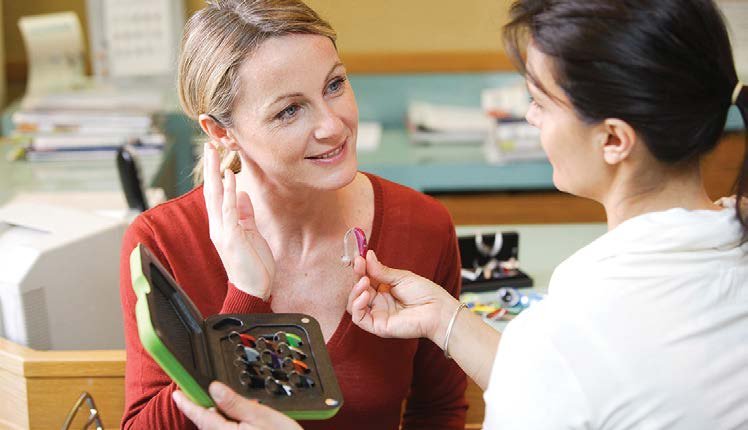
In this lesson, students learn that because hearing loss is more prevalent with aging, a comprehensive understanding of the geriatric patient is essential to providing corrective hearing solutions. Students will study demographics and trends, general health problems, hearing and balance problems, types and causes of hearing loss, and the choices of help available for hearing problems. Upon completion of this lesson, students will be able to describe types of hearing loss, explain what causes hearing and balance problems. Students will recount the importance involved in a systematic overall client assessment and relate how knowledge of client’s general health is vital to providing restorative hearing measures.

Prerequisite: None

In this lesson, students will delve into comparison of people with normal hearing and people managing hearing loss, particularly as it progresses to the point that normal life activities are affected. Students will discuss personality changes from confusion and anxiety to withdrawal and paranoia. Upon completion of this lesson, students will be able to describe how to gain client confidence through discerning awareness of these personality and behavior changes that may affect acceptance of treatment for hearing loss.

Prerequisite: Lesson 1: Special Needs of Geriatric Population

This class introduces students to the history of hearing loss treatment from middle ages to present. Upon completion of this lesson, students will be able to explain the range of symptoms relating to Autoimmune/asymmetric sensorineural hearing loss and they will recount the differing factors involving attenuation, recruitment and distortion. Students will identify the basic hearing aid structure and will discuss the variety of sizes and styles, and describe the advantages and disadvantages of each. Students will be able to relate the details of circuitry terms and functions as well as full and accurate explanations relating to the terms analog, linear, compression, DSP, microphones, receivers, ALD and implantable devices.

Prerequisite: Lesson 2: Psychology and Psychosocial Behavior

This lesson prepares students with a comprehensive study of the outer, middle and inner ear. Students will identify various landmarks on the pinna; and define and discuss the function of middle ear ossicles. Students will recall structures in the cochlea, and explain the function of inner and outer hair cells. They will describe and discuss the complex auditory pathway including brain stem and brain functions. Upon completion of this lesson, students will be able to relate how “Sound” is produced. They will review and explain the physics of sound to include power, wave forms, intensity vs. loudness, decibels (logarithmic explanation), phons and sones.

Prerequisite: Lesson 3: Adult Sensorineural Hearing Loss (ASNHL)

This lesson prepares students with a comprehensive and detailed study of the structures and functions of the cochlea. When students finish this lesson they will be able to identify, recognize and explain the unique functions of the following topics: cochlear fluids, electrolytic content, basilar wave motion, membrane function, divisions of stria vascularis, organ of corti, chemical actions in the cochlea and movement of inner and outer hair cells.

Prerequisite: Lesson 4: Anatomy & Physics

This lesson begins with special emphases on review and explanation of the clients need for assessment using air/bone/speech audiometric tests. Students will also relate a comprehensive understanding of appropriate need for peripheral auditory assessments: pure tone tests, speech tests, acoustic immittance, auditory brainstem response (ABR), electrocochleography (ECochG), otoacoustic emission (OAE), Transient-Evoked Otoacoustic Emission (TEOAE) and Distortion-Product Otoacoustic Emission (DPOAE). They will further review and explain central auditory function, in particular, Central Auditory Processing Disorders (CAPD) categories and the instruments used to identify and measure processing problems. Students will be able to explain that although many of these diagnostic tests are not performed by the hearing instrument dispenser a solid understanding of the pathology and tests to measure hearing abilities is necessary in helping hearing instrument users realize the benefits and limitations of hearing aids.

Prerequisite: Lesson 5: Cochlear Physiology

In this lesson, students further examine the properties of sound. They will detail how sound is produced, what it is, how it travels and how it is measured. They will demonstrate full mastery of the following terms used to describe sound: Hertz, wavelength, frequency, pitch, amplitude, harmonic, loudness, decibel, Sound pressure level (SPL) and hearing level (HL).

Prerequisite: Lesson 6: Assessment of Peripheral & Central Auditory Function

In this lesson, students will realize and communicate an understanding that hearing instrument dispensers are frequently the first healthcare professionals people seek when they suffer hearing loss. Therefore, it is important that hearing instrument dispensers be able to recognize signs requiring medical referral. Upon completion of this lesson, students will be able to identify and describe various outer, middle and inner ear disorders requiring referral of the client for medical treatment. Students will also learn how they may assist the physician in managing a chronic problem, which may co-exist with hearing aid use.

Prerequisite: Lesson 7: Acoustical Fundamentals

During this lesson, students will learn how to systematically measure hearing loss and residual hearing abilities. They will review a case history to identify FDA red flags for referral and will recount the importance of recording a complete and accurate assessment of symptoms, attitudes and concerns of the patient. Students will list and explain the steps involved in inspecting the ear thoroughly during otoscopy. They will recall how to use the Otoscope to examine the client’s ear. They will review sample scripts for patient instruction and verify the correct procedure for a hearing test. Upon completion of this lesson, students will be able to describe the procedure of masking of air, bone and speech audiometry and will further state the reason behind the rule. The student will focus on obtaining and recording accurate PTA, MCL, UCL, LDL, SRT and speech discrimination scores and will go on to list and explain each procedure to obtain correct measurements.

Prerequisite: Lesson 8: Basic Hearing Disorders

Students completing this lesson learn to read and use the symbols on the audiogram. Using sample audiograms, students will demonstrate the ability to recognize and explain the types of hearing loss by the audiogram shape and characteristics. The student will further the skills they have learned by reviewing speech tests, including speech with noise, and comparison of tones to speech banana as a reference for speech discrimination. Students will describe how to complete a comprehensive assessment of the audiogram and recall a case history for hearing instrument candidate who needed no medical referral.

Prerequisite: Lesson 9: Measurement of Hearing Loss — Audiometry

The student will recall the method of masking and explain the reasoning behind obtaining a true threshold for air and bone conduction testing. The student will describe the occlusion effect, interaural attenuation, over masking, under masking, crossover, masking dilemma and the plateau method of testing. The student will detail and explain masking techniques for air, bone and speech testing.

Prerequisite: Lesson 10: Understanding & Interpreting the Audiogram

Students completing this lesson are prepared to clarify why they must be able to describe the function and benefits of a hearing aid to the user and must be able to provide information on the limitations of residual hearing with a hearing aid. The student will recall and explain the function of the components of a hearing instrument: power source, microphones, amplifier types and receivers. The student will further identify and define the function in a variety of circuitry: linear, compression threshold/compression kneepoint, compression ratios, attack and release times, compression limiting, wide dynamic range compression and digital processing. Students completing this lesson use this information to both choose a circuit and to modify the performance of a hearing aid to benefit the user.

Prerequisite: Lesson 11: Masking

In this lesson, students will come to realize that even the most careful selection and fitting of a hearing instrument is only beneficial if the user will actually wear it. They will recall the history of outcome verification with special emphasis on the reason for each advancement. The student will further recall current methods used in clinical practice and be able to summarize the best practice protocol. They will recognize and apply sound field-testing, as well as probe microphone testing. In addition, students will explore Real Ear technology.

Prerequisite: Lesson 12: Hearing Instruments

Students completing this lesson will recall and be able to describe the general criteria of earmolds and custom hearing aids. They will explain why hearing loss or listening needs are matched to the earmold type and material used. Students will give details on the importance of proper venting relative to the hearing loss. Students will speak about other considerations to a successful fitting, such as abilities of the user, the shape and size of the ear canal and the length of the mold. Students will list and define various terms such as: coupler, behind the ear (BTE), ear hook, venting, receiver mold, pressure vent, open molds and face plate.

**Guest lecturer for Lesson 14 is Edward Lybarger. Mr. Lybarger covers earmold impressions and earmold acoustics. Edward is the son of the famous Sam Lybarger, electrical engineer who was the pioneer of earmold acoustics and is to this day referred to in Audiology textbooks and journals. He was also the engineer for RADIOEAR Corporation for many years.

Prerequisite: Lesson 13: Outcome Verification Technology

Completion of this lesson prepares the student to provide proper counseling of the patient, so that both the professional and the patient realize the best hearing solution. Students will recall the options that lead to better hearing and understanding. They will detail and describe the steps to guide patients to realistic expectations, to expect a phase of re-learning how to hear, and to manage complex listening environments. This lesson also introduces students to programming options in various manufacturers’ software. Students will recall and be able to explain the many options in hearing aid fitting and the rationale behind first fit or best fit selections. Students will review hearing aid features based on hearing needs and lifestyles such as multi-memory, directional mics, matrix, volume control and size/style of instruments. Students will explain troubleshooting a “dead” hearing aid by outlining the major enemies of hearing aids and how providing proper instruction to the user in the care and maintenance of hearing aids can avoid problems. Students will recall and describe proper tools for cleaning and inspecting the patient’s ears and their hearing aids. Furthermore, students will specify the procedure for checking hearing aid function. Upon completion of this lesson, students will be able to check the hearing aid battery, microphone, receiver, wiring, fit and condition.

Prerequisite: Lesson 14: BTE Earmolds & Couplers

Upon completion of this lesson, students will be able to define and categorize hearing loss due to noise exposure by type, duration and intensity. Students will recall and be able to explain NIHL characteristics. Students will be able to describe damage risk criteria as it relates to sound intensity and sound pressure and will be able to describe susceptibility to hearing loss at varying noise exposure levels. Students will recall and explain Occupational Safety and Health Administration (OSHA) and other government regulations related to workplace noise. Students will review and be able to describe hearing conservation programs and personal responsibility with hearing protection. Students will describe relationships of noise-induced loss, age induced loss and chemical/drug induced loss.

Prerequisite: Lesson 15: Programming & Troubleshooting

Upon completing the study of medical specialties of otolaryngology/otolaryngologist and audiology/audiologist, students will be able to define and outline the scope of each practice. Students will be able to explain interrelationships existing between these practices and will clarify that hearing instrument dispensers are yet another level of healthcare provider. They will specify the importance of following established measures for professional patient protocol. Students will recap previous lessons and more thoroughly explore “sudden sensorineural hearing loss” and they will describe the symptoms involved and classify emergency status as well as explain the causes, theories, treatments and prognoses involved.

Prerequisite: Lesson 16: Noise Induced Hearing Loss (NIHL)

Students completing this lesson will be able to describe the importance of understanding that even though the dispenser will not treat for Meniere’s disease, it is important to understand the relationship between the disease, the treatment and hearing loss. They will relate the factors necessary for a diagnosis of Meniere’s disease. They will recall the partial case histories presented to show how sufferers explain Meniere’s. Students will explain how the disease is explored from the microscopic exploration of Reissner’s membrane to causes and symptoms suffered.

Prerequisite: Lesson 17: Otolaryngology & Audiology

Completion of this lesson prepares students with the skills necessary to recognize the symptoms of infection and to train the hearing aid dispenser for an accurate assessment when it concerns a medical referral. Students will recall and detail the anatomy and physiology of the external ear, including the supporting structures and cranial nerves. They will explain and define Otitis externa in early, acute, chronic, mild and severe stages and recall the slide format presented for recognition. They will also detail symptoms and characteristics of furunculosis, otomycosis, granular myringitis, bullous myringitis, necrotizing external otitis, perichondritis, herpes zoster oticus, and erysipelas also shown in slides. Students will give details of the symptoms, causes, treatments and examine the implications of various infection and disease processes on the ear and hearing health.

Prerequisite: Lesson 18: Treatments for Meniere’s Disease

Upon completing this lesson students will be able to define, compare and contrast tympanoplasty and myringoplasty. They will recall the history and progress of these surgeries. The student will be able to describe the embryological development of the hearing structures and will review anatomy of the entire hearing organ. In addition, they will be able to provide detailed explanations of causes and symptoms of perforations along with the effects upon hearing abilities both before and after surgery.

Prerequisite: Lesson 19: Infections of the External Ear

Upon completion of this lesson, students will explain under what circumstances a hearing aid dispenser may have reason to refer patients for cochlear implant based on client case history and audiogram information. They will prepare to provide the client with details on the process and components of a cochlear implant by becoming familiar with types of implants available today. Students will be able to relate the importance of knowing the indications for cochlear implant and the contraindications involved. They will recall the importance of skillful expertise for facilitating ease of discussion and providing competent encouragement to patients seeking implants for better hearing. Students will recognize that the dispenser must be ready to communicate knowledgeably to hearing loss sufferers who want information about cochlear implants. Students will relate the importance of explaining the surgery and detailing the postoperative management and rehabilitation involved.

Prerequisite: Lesson 20: Tympanoplasty

This lesson, in combination with Lessons 23 and 24 provides students with an intensive review of everything learned to date. Students will complete multiple-choice and true/false questions in preparation for the Hearing Aid Dispenser Certification Examinations. Upon completion of Lessons 22, 23 and 24, students will be prepared to sit for the Hearing Aid Dispenser Certification Examination.

Prerequisite: Lesson 21: Cochlear Implants

This lesson continues the intensive review of everything learned to date. Upon completion of Lessons 22, 23 and 24, students will be prepared to sit for the Hearing Aid Dispenser Certification Examination.

Prerequisite: Lesson 22: Competency Building Exercise I

This lesson completes the intensive review of everything learned to date. Upon completion of Lessons 22, 23 and 24, students will be prepared to sit for the Hearing Aid Dispenser Certification Examination.

Prerequisite: Lesson 23: Competency Building Exercise II

Students completing this lesson present the basic principles of ethics in dispensing hearing aids. They will recall standards of conduct between professionals and patients and between professionals and colleagues. They will recount the items to include in a pledge for ethical, professional, caring service. They will go on to define the following: confidentiality, medical referrals, maintaining records, fees, discontinuing service, contracts, safety and sanitation. Students will consider legal considerations for advertising pieces, truth, taste, decency, disparagement of competitors, bait and switch and guarantees. They will be able to explain the dilemma between legal and ethical.

Prerequisite: Lesson 24: Competency Building Exercise III

This lesson introduces students to generalized sales and marketing techniques. They will explain the objectives of this lesson to include designing a strategic marketing plan, the importance of a logo, branding, website, use of media and developing professional referrals. They will learn how using mass communication tools, personal contacts, newsletters and free publicity can ensure business success.

Prerequisite: Lesson 25: Ethics and Legal Considerations

Students will review and demonstrate in-office hearing aid repair and modification techniques commonly required in clinical practice. They will identify fit-related issues and perform shell modifications including grinding and buffing canal and helix areas, shortening canal length, and adjusting vents to improve comfort and reduce occlusion. Students will recall proper use of repair tools and equipment such as Dremels, drill bits, buffers, vacuums, otoscopes, listening devices, and ultraviolet curing systems, with emphasis placed on safety procedures and inspection techniques. Students will demonstrate the ability to manage common hearing aid issues including wax removal from receivers, microphones, vents, and battery compartments, replacement of wax guards and battery doors, and patching shell defects to prevent feedback. Students will recognize key considerations involved in modifying hearing aids in-office and understand when manufacturer repair may be required.

Prerequisite: Lesson 26: Sales & Marketing Techniques

Imagine walking into your practical exam already knowing exactly what to expect and what your examiner is looking for. That’s the focus of this chapter. Here, we present two invaluable video sessions featuring Paul Jay, a seasoned proctor from Texas. In the first video, recorded a few years ago, Paul Jay takes you through the full process of proctoring a student’s hearing exam, letting you see the entire experience from a real exam perspective.

Then, in a more recent update, Paul Jay revisits that same practical scenario, this time narrating behind the scenes. He explains what he’s looking for, why he asks certain questions, and how he interprets the student’s responses. These dual perspectives give you a comprehensive edge, ensuring you’re as prepared as possible for your own practical exam. That’s why we keep both versions available—so you can gain maximum confidence and insight.

Prerequisite: Lesson 27: Repair and Modification

At the core of the Hearing Aid Academy stands our founder, Dennis L. Gunn. Dennis had a vision: to create an online training program that would give students a better, more accessible path to mastering the knowledge and skills needed to pass their licensing exams. As part of that journey, Dennis often shared what he called the “Newborn Baby Story.” This story encapsulates the very essence of why we do what we do in the hearing aid field. It forms the foundation of our teaching methods, illustrating the profound impact that helping someone hear can have—like opening the world to a newborn’s first sounds.

In this chapter, you’ll discover how Dennis’s vision and this inspiring story shape our entire approach, giving you a deeper understanding of the mission behind your training and the difference you’re about to make.

In this final chapter, the Hearing Aid Academy provides you with three distinctly different comprehensive final tests. Each of these tests is designed to mirror the format and rigor of your actual state exam, giving you three separate opportunities to test yourself under exam-like conditions.

By taking all three, you can thoroughly gauge your readiness. If you’re consistently scoring in the 80% to 90% range, you’ll have strong confidence that you’re well-prepared to pass your state licensing exam. If you find yourself scoring lower, it’s a perfect opportunity to pinpoint any topics you need to revisit and study further before you take the actual exam. These sample tests are crafted to reflect the types and styles of questions you’ll encounter, ensuring you feel fully prepared and confident on exam day.

Hearing aid specialist showing hearing aid options to a smiling patient
30Lessons, 80+ hours of video, 3 final exams

What You Receive

  • Access To The Online Portal (You just need an internet connection)
  • All Books and Course Materials (INCLUDED – No Additional Cost)
  • Proficiency Tests On All Materials (at the end of each training module)
  • Three (3) Final Exams [Updated for 2026] Hearing Aid Academy EXCLUSIVE
  • Over 80 Hours of Video Education – Hearing Aid Academy EXCLUSIVE

But This Is What Really
Sets Us Apart…

LIVE Instructor Support

Hearing Aid Academy EXCLUSIVE

LIVE HANDS-ON BOOTCAMP

(Every 3 Months, Different Cities Around The U.S.) Hearing Aid Academy EXCLUSIVE
UNLIMITED Simulated Hearing Tests

Hearing Aid Academy EXCLUSIVE

Job placement opportunities through our Job Alliance Program

Hearing Aid Academy EXCLUSIVE

Why Should You Consider The

Hearing Aid Industry
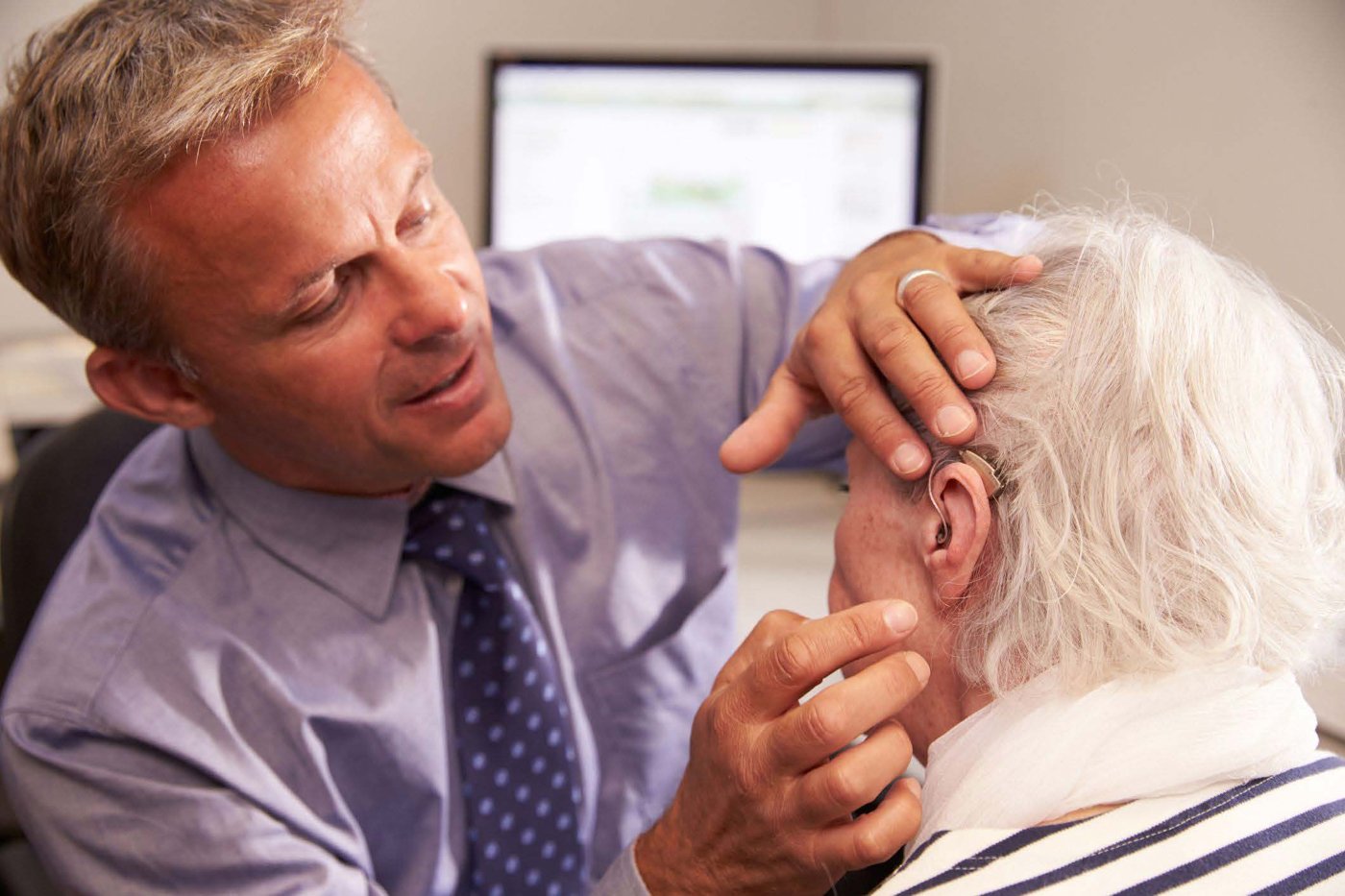
Hearing aid specialist fitting a hearing aid on an older patient
  • Growing Senior Population
  • Increased Demand From Younger Patients Due To Long Exposure To Ear Buds and Similar Devices
  • Advancements In Technology Have Made Hearing Aids More Desirable, Affordable, and Accessible To A Bigger Audience.
  • Predictable Demand and Growth Of Sales Through Huge Retail Centers (Costco, Walgreens, Sam’s Club and Others)
  • There Are More Jobs Than Licensed Hearing Aid Specialists To Fill Them.
  • Secure, Well Respected Career With Great Hours, Excellent Pay, and Comfortable Work Environment.

Next Steps…

  • Get Approved For Licensing In Your State
  • Receive Current Pricing Information
  • No Financial Commitment
  • Get Ready to Enroll

Submit your registration at:hearingaidacademy.com/register

Student studying beside a stack of books, a graduation cap and coins

Financing Available To Those Who Qualify

Register Now